Pages

66% of Rice Consumed in Ghana Imported

The latest Oxford Business School report has revealed that only 34 percent of rice consumed in the country is produced locally...

National Friday Wear Program Creating Jobs For The Chinese

The Chairman of the Textile Workers Union, Abraham Koomson claims the National Friday wear program has created jobs for Chinese...

Reasons Americans Should Celebrate the Brexit Vote

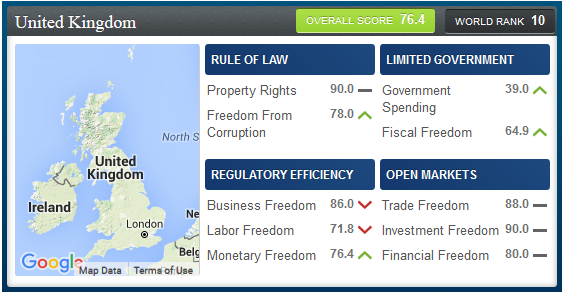
The momentous victory for the Brexit campaign signals a new era of freedom for the British people...

Kenyan Tech Star Ushahidi Makes Major Design Updates

Ushahidi, one of the earliest Kenyan tech success stories, has unveiled a major redesign of its key features...

Kenya Airways Celebrates 40 Years in The Skies

Kenya Airways on Sunday January 22, 2017 marked its 40th anniversary since it was incorporated in 1977...

Tuesday, January 31, 2017

Ibrahim Mahama warns Kennedy Agyapong

ibrahim mahama, kennedy agyapong
Chief Executive of Engineers and Planners, Mr Ibrahim Mahama, has warned acerbic tongue New Patriotic Party Member of Parliament for Assin Central, Kennedy Ohene Agyepong, to forthwith, refrain from dragging his hard earned reputation in the mud or face his wrath.

Irked by the incessant but unwarranted and unguarded attacks on his person and family by the foul mouth Assin Donpem-born legislator, Mr Ibrahim Mahama has been narrating how Kennedy Agyepong, for several years without any provocation, has made him his chop stick in the media.

The shrewd entrepreneur and media-shy Engineers and Planners CEO, who is also a younger brother of immediate past president John Mahama, having perhaps had enough of Kennedy Agyapong’s never-ending vituperations in the media, was speaking to well-wishers and friends who thronged his residence to inquire what the problem is between him and the maverick MP.

Most of the people who came to “commiserate” with Mr Ibrahim Mahama following the NPP MP’s recent attacks on him and her late mother; could not fathom why Hon Agyepong, who was only recently adjudged by policy think tank, ODEKRO, as among MPs who never made statements on the floor of parliament in the life of the 6th parliament, would spend much of his time lampooning the business magnate at the least opportunity.

Livid by the shameful behavior of the NPP MP, the former President’s brother intoned: "I don’t go around bragging about what God has blessed me with and I don’t also go round threatening people like what Ken does...but he should know that some people, such me may, not be abrasive publicly as he is but…some of us when we’ve had enough of trash can be as ‘wild’ as the beast.”

Short of sharing exactly what that meant, the usually reclusive and soft spoken Engineers and Planners CEO only told his audience, "go n tell him (Ken) that I can be more ruthless than he thinks he is but, I just respect myself, my family and Ghanaian people hence; I have restrained myself following him into the gutter in spite of his numerous unsubstantiated and wild allegations and most of the time, pure lies.”

"Tell Ken that by the grace of God I have long been blessed before John (John Mahama) became Vice-president and later President... is it my fault that my senior brother climbed to those heights? Is it my fault that I am where I am today…I’m not God to determine others’ future and I’m content with what God has gifted me...I don’t compete with anyone neither do I envy those before me and even those after me. It is God's wish,” he stated.

The NPP Assin Central MP has since the defeat of President John Mahama and the NDC in last December elections picked on Mr Ibrahim Mahama and his family and has on countless occasions made unguarded statements and spurious allegations against him.

In one such unsubstantiated allegation against Mr Ibrahim, the MP who has always promised to expose shady deals of his political opponents but is yet to redeem any of his pledges accused the former President’s brother of dealing in cocaine and stolen cars.

In his usual abrasive no hold bar claims on Oman Fm’s Boiling Point programme, Kennedy Agyapong alleged that President John Mahama’s late step mum, who is also the mother of Ibrahim Mahama, was a drug baron. “She is obsessed with drugs and she baths with it,” he alleged

He also accused Mr Ibrahim Mahama of dealing in stolen cars which he alleged the latter supplies to some prominent chiefs in this country.

Interestingly, checks on the CEO of Engineers and Planners, Ibrahim Mahama who is being accused of involvement in stolen cars revealed that his company is having in its possession over 300 pieces of earth moving equipment, pay loaders, bulldozers, multi-purpose tipper trucks, tankers, pickups etc.
With the attacks becoming one too many, Mr Ibrahim is warning Kennedy Agyapong he has had enough of his gibberish and may be forced to react in like manner “I'm just blessed by God as a young man, I don’t engage in shady deals as Ken has variously alleged neither have I been boastful of where God has placed me...I’m not even directly into politics nor being executive member of my brother's party, the NDC, so what is my offence that should warrant his (Ken) inexorable attacks on me?” Ibrahim queried.

Donald Trump’s Visit to the U.K. Puts the Queen in a ‘Very Difficult Position’

donald trump, the queen
President Donald Trump’s state visit to Britain has put the Queen in a “very difficult position,” the former head of the U.K. Foreign Office claims.

Lord Peter Ricketts says the visit, announced by British Prime Minister Theresa May while meeting President Trump in Washington on Friday, should be downgraded from a state visit to spare Her Majesty any controversy.

As a UK petition to stop President Trump’s planned visit to Britain reached more than 1.5 million signatures and thousands protested across Britain on Monday, Lord Ricketts, in a letter to the The Times of London, said the invitation so early in Trump’s presidency was “premature.” He also added May must “move fast” to protect the Queen from more controversy.

Read Also:  Donald Trump Is Wrong About Israel's 'Security' Wall

Lord Ricketts said that it is unprecedented for U.S. presidents to be given a state visit in their first year of office – and said he questioned whether Trump is “specially deserving of this exceptional honour.”

Adding, “It would have been far wiser to wait to see what sort of president he would turn out to be before advising the Queen to invite him. Now the Queen is put in a very difficult position.”

Lord Ricketts spoke out following President Trump’s ban of refugees and citizens of seven mainly Muslim countries from the United States signed in an executive order hours after May’s visit.

The Times claimed that Buckingham Palace was privately unhappy about the perception the Queen was being dragged into a political event.

Regardless of the protests, May has insisted that the state visit will go ahead.

Lord Ricketts, 64, says that the decision to rush forward an invitation risks breaching the convention that while the Palace acts on ministers’ advice, the government stops the Queen from “getting drawn into political controversy.”

Conservative Muslim lawmaker Sayeeda Warsi told BBC radio that Britain should question whether it should roll out the red carpet for “a man who has no respect for women, disdain for minorities… and whose policies are rooted in divisive rhetoric,” according to the AFP.

On Monday, May told a press conference in Dublin that “the United States is a close ally of the U.K., we work together across many areas of mutual interest and we have that special relationship between us.”

Adding, “I have issued that invitation for a state visit to President Trump to the UK and that invitation stands.”

Along with the Queen, Prince Charles, along with his wife Camilla, Duchess of Cornwall, will take a prominent place in the visit. He normally meets the visiting head of state and brings them to Horse Guards Parade where there is the formal welcome by his mother the queen. Then, a lunch at Buckingham Palace typically follows.

The prince has made no secret of his belief that climate change is one of the key issues of our time. A royal source previously told PEOPLE that Charles will not be stopped from raising the issue with Trump, but he will do so when it’s “entirely appropriate to the situation.

Donald Trump Is Wrong About Israel's 'Security' Wall

President Donald Trump's use of Israel's separation wall as an example of a valid security measure is based on gross ignorance, at best. Israel's wall separates families from their land, communities from each other, and often communities from educational, medical and religious services [Finbarr O'Reilly/Reuters]


donald trump, isreal security wall


On January 27, as proof of the effectiveness that walls can have in preventing the movement of people between borders, United States President Donald Trump told Sean Hannity of Fox News: "A wall protects. All you have to do is ask Israel. They were having a total disaster coming across and they had a wall. It's 99.9 percent stoppage."

One could say, after all, that it's the Palestinians who were "having a total disaster coming across".  Since 1967, Israel has built some 250 illegal settlements and outposts on Palestinian land in the West Bank and occupied East Jerusalem, in which more than 600,000 Israelis now live, in violation of the Fourth Geneva Convention.

Putting that aside for the moment, there are several key problems with Trump's claim. The first is the wall's raison d'etre: it's a "separation" wall, not a "security" wall, according to its name in Hebrew (gader hafrada). It was originally conceived in 2000, by Ehud Barak's government as a negotiation threat to Palestinian Liberation Organization leader, Yasser Arafat: "show more flexibility or we'll unilaterally create a consolidated demographic border". Fast forward a few years, and that threat materialised with profound humanitarian and economic consequences that continue to be felt by the Palestinians.

Border constrictor


A glance at a map detailing the separation wall's route quickly reveals that the vast majority of it - 85 percent - is, or is planned to be, built within the West Bank, not along the Green Line or the 1949 Armistice Line, the border between Israel and the Palestinian West Bank recognised by the international community.

This annexation accounts for nearly 10 percent of the West Bank and includes prime agricultural land and strategic water reserves. At one point, the wall cuts 22km deep into the West Bank.

The purpose of its meandering deviation from Israel's border, and into the West Bank, is to unilaterally annex the land on which the majority of Israel's illegal settlements and outposts have been built.

 It's a border constrictor for Palestinians - coupled with an elaborate matrix of movement and access restrictions - that separate families from their land, communities from each other, and often communities from educational, medical and religious services.

The wall has also separated Palestinian towns and cities from Jerusalem, Palestine's economic, cultural and religious centre.

In 2004, the International Court of Justice's Advisory Opinion on the illegality of Israel's separation wall, among other things, stated that the wall's route deep into the West Bank to annex Israeli settlements, and allow space for them to develop and expand, proved that security was not the main motivation behind the construction of the wall.

Several highly respected international and Israeli NGOs concluded the same. Israeli NGOs BIKOM and B'tselem stated in a report published in 2005:

    "[I]it is clear that contrary to the [security] picture portrayed by the state, the settlement-expansion plans played a substantial role in the planning of the Barrier's route. The report shows that not only were security-related reasons of secondary importance in certain locations, in cases when they conflicted with settlement expansion, the planners opted for expansion, even at the expense of compromised security."


 '99.9 percent stoppage'


The second problem with Trump's claim is the alleged "99.9 percent stoppage". For starters, the wall is only two-thirds complete. A rector at the Tantur Ecumenical Institute, a centre of theological research between Jerusalem and Bethlehem, told me: "An incomplete wall is about as effective as a mosquito net that covers two-thirds of you. Would you buy one to protect you?"

 The wall was also not primarily responsible for stopping Palestinian attacks on Israelis during the Second Intifada. Rather, the steep drop in attacks in 2005 was primarily due to a tactical decision by Hamas and other Palestinian political organisations to suspend these attacks, focusing instead on the Palestinian parliamentary elections imminent at the time - a fact reported in January 2006 by Shin Bet, Israel's intelligence agency.

While the separation wall has had a part to play in making these attacks more difficult, a pervasive Israeli security intelligence network and military presence on the ground inside the West Bank - in tandem with a complicit Palestinian Authority - play a greater role.

In 2009, Yuval Diskin, then head the Shin Bet, said that the wall didn't need to be completed as Israeli military intelligence was sufficiently robust to thwart any Palestinian attacks from the West Bank.

addition, on any given day there are tens of thousands of Palestinians, predominantly labourers, who smuggle themselves inside Israel to seek work.

At obscure points around Jerusalem, one can see Palestinian labourers scaling the wall with makeshift ladders and disappearing into the distance, or can find ropes or resourcefully used skips that labourers have used to get into Israel.

It is clear that the primary reason for West Bank Palestinians to smuggle themselves into Israel is to find work, given the devastating effect of Israel's separation wall and occupation on the Palestinian economy.

Trump's use of Israel's separation wall as an example of a successful security measure is based on gross ignorance, at best. Its real damage comes in his championing and legitimising a wall built by Israel - an occupying, colonising power - predominantly inside the West Bank, in breach of international law. Such public statements enable Israel to continue its systematic violations of Palestinian rights with impunity.

Written By: William Parry (a freelance writer, author of Against the Wall: the art of resistance in Palestine, and co-director and co-producer of a short documentary, Breaking the Generations: Palestinian prisoners and medical rights).

Monday, January 30, 2017

Germany to Partner Ghana in Agricultural Development

German Ambassador to Ghana, Christoph Retzlaff meets Dr. Owusu Afriyie Akoto.
The German Ambassador to Ghana, His Excellency Christoph Retzlaff, has met with Ghana's Minister of Food and Agriculture, Hon. Dr. Owusu Afriyie Akoto, to dicusss ways the German Government can contribute towards the growth and development of the sector.

The two parties discussed amongst other things, how the European powerhouse can partner the private sector in order to support the development of Ghana's agriculture.

His Excellency Christoph Retzlaff, who announced this when he paid a courtesy call on the Agric Minister at his office last Friday, observed that there are great potentials in the country's agricultural sector which when tapped will inure to the utmost benefits of all Ghanaians.

He said Germany will readily support Ghana's agriculture particularly in partnership with the private sector to improve its growth and development.


Read Also: 66% of Rice Consumed in Ghana Imported

The German Ambassador to Ghana therefore commended the Agric Minister for his zeal and commitment towards his duty.

He therefore requested that the Ministry furnishes him with government's plans and proposals towards revamping the agricultural sector so that his government can adequately contribute.

On his part, the Food and Agriculture Minister welcomed the idea and expressed government of Ghana's readiness to partner Germany in the development of the agric sector.

He said the government under the leadership of His Excellency Nana Addo Dankwah Akufo Addo, made a promise to Ghanaians to modernize the agricultural sector and create jobs for the teeming youths, adding that any effort geared towards the the fulfilment of that objectives will be gladly welcomed.

"Our President is passionate about the development of the agric sector and the creation of jobs, we will therefore not hesitate at all in making sure that objective is fulfilled," the minister emphasized.

The Minister had earlier on met with Ambassadors from Canada, Sweden and other developing partners.

Sunday, January 29, 2017

The Untold Story of The Kenyatta Family's Wealth

kenyatta family
The vast wealth of the Kenyatta family was considered such a crucial factor in Kenya’s internal security that the CIA, America’s spy agency, issued a special report on it the day Kenya’s founding father was buried in 1978.

The report, which was made public last week, talked of thousands of acres of land owned by Mzee Kenyatta and his wife Mama Ngina, high-powered wrangles over gemstones mines, a colossal stake in the charcoal trade, secret exports of ivory and an unspoken fear that Kenyans would revolt and seize back land from the First Family.

Stamped ‘secret’, the Economic Intelligence Weekly Review dated August 31, 1978 is part of nearly 800,000 declassified files that the CIA was forced to publish online just ten days ago.

It gives an insight into the explosive mix of power and business in the post-independence Kenya and might explain why the Kenyatta family has always appeared to be indebted to President Daniel arap Moi, who took over on Mzee Kenyatta’s death, amid a wave of resentment against the country’s ruling class. The CIA, in the report, equates the Kenyatta family to royalty and expresses fear that it might be the target of “wealth redistribution” following the change of government.

Contrary to its analysis, however, Moi not only vowed to protect Kenyatta’s legacy in the Nyayo philosophy — following in Mzee’s footsteps — but anointed a scion of the Kenyatta clan, now President Uhuru Kenyatta, as his successor when he stepped down in 2002 after ruling Kenya for 24 years.

Uhuru’s first stab at the presidency was thwarted by the candidature of Moi’s former Vice-President Mwai Kibaki, who rode to victory on a national coalition and a last-minute backing of Raila Odinga.

According to the CIA’s assessment in 1978, the Kenyatta family was “resented”, perhaps because of a public perception that their wealth had been acquired through dubious means.

The CIA wrongly speculated that that Moi and the then Attorney General Charles Njonjo were likely to “capitalise on the widespread dislike of Mama Ngina and on public discontent over corruption to take over large shares of the family’s holdings.”

Such a move would lead to conflict, it warned. “Whether attempted as a first step toward widespread income redistribution or merely as a shift of resources in favour of the new rulers, such a move would almost certainly provoke a strong political response from the Kenyatta family,” the report says.


Mama Ngina Kenyatta
Mama Ngina Kenyatta


That “strong political response” is undefined, but part of the 13-million page document shows America was worried that the ministers who had been loyal to Kenyatta were likely to overthrow Moi or ensure that he did not succeed Kenyatta after acting as President for 90 days as the Constitution then prescribed. That did not happen.

After being sworn in as Acting President, Moi neutralised ministers considered closest to Kenyatta, such as Paul Ngei and Mbiyu Koinange, and outmaneuvered his opponents with the support of Njonjo and the Laikipia politician G.G Kariuki, deftly establishing his own rule The Kenyatta family was already rich, and the CIA was able to find what it describes as “extensive holdings of farms, plantations, hotels, casino and insurance, shipping and real estate companies” as part of the wealth portfolio.

Vast farms


It reported: “Kenyatta himself owned only about a half-dozen properties covering roughly 4,000 hectares, mainly farms in the Rift Valley and in the district of Kiambu where he was born.

His wife, Mama Ngina Kenyatta, however, owns at least 115,000 hectares including a 13,000 hectare ranch in the Kiambu district, two tea plantations at Matu and Mangu, and three sisal farms near the Tanzanian border.

She also has considerable holdings in the resort areas around Mombasa and is involved in coffee plantations and in the Kenyan ruby mines.” The Standard on Sunday has been unable to establish the veracity of this assertions, which were cabled to Washington by the agency’s Nairobi operatives.

Mama Ngina, who is distinctly private and whose public appearances are rare, and Uhuru’s half-sister Margaret, now in her eighties and ailing, are depicted as very wealthy at that time. Margaret, the second African Mayor of Nairobi, was the daughter of Kenyatta’s first wife Wahu.

Source: Standard Media

'It's Not a Muslim Ban': Trump Defends Controversial Executive Order on Refugees

donald trump refugee protesters
President Donald Trump on Saturday defended his executive order barring travelers from seven Muslim-majority countries from entering the US.

"It's not a Muslim ban," Trump told reporters in the Oval Office as he signed several executive orders.

"It's working out very nicely. You see it at the airports, you see it all over," he added.

Trump's order halted refugee arrivals into the US for 120 days, and it barred citizens of Iraq, Iran, Sudan, Libya, Somalia, and Yemen for 90 days.

 The order was meant to "protect the United States from foreign nationals entering from countries compromised by terrorism" and implement "a more rigorous vetting process."

But the new restrictions caused chaos and confusion at airports across the country on Saturday, as refugees and even permanent residents of the US were detained by border agents.

A White House official told reporters that people from the seven countries who hold US green cards will be cleared to enter the US on a case-by-case basis. If they plan to travel outside the country, they must now check with a US consulate before leaving to find out if they can return, the official said.

The official also rebuked the notion that Trump's order amounted to a Muslim ban, noting that several predominantly Muslim countries are not affected. The official said the number of people affected by the action is "relatively small."

"It’s important to keep in mind that no person living or residing overseas has a right to entry to the US," the official said.

Lawyers have already filed legal challenges to Trump's order, arguing it is "unconstitutional" and "a violation of international law."

Protests over the order erupted at John F. Kennedy airport on Saturday after two Iraqi refugees who had been granted asylum and were carrying valid visas were detained by border agents and denied entry.


trump protesters
Protesters assemble at John F. Kennedy International Airport in New York, Saturday, Jan. 28, 2017 after two Iraqi refugees were detained while trying to enter the country.


At least seven other travelers were reportedly detained at the same airport on Saturday, one official told The New York Times.

 One of the Iraqis, Hameed Khalid Darweesh, was released Saturday afternoon after two New York lawmakers arrived at the airport and demanded to see him.

Hundreds of protesters descended on the airport's Terminal 4, wielding signs that read, "No ban, no wall," and, "Refugees welcome," local media reported.

It's unclear how many travelers have been affected by the order so far, but refugee advocates and lawyers say they have been receiving reports of immigrants and refugees being detained at airports across the country.

“They’re literally pouring in by the minute,” Becca Heller, the director of the International Refugee Assistance Project, told The Times.


Source: Business Insider