Pages

66% of Rice Consumed in Ghana Imported

The latest Oxford Business School report has revealed that only 34 percent of rice consumed in the country is produced locally...

National Friday Wear Program Creating Jobs For The Chinese

The Chairman of the Textile Workers Union, Abraham Koomson claims the National Friday wear program has created jobs for Chinese...

Reasons Americans Should Celebrate the Brexit Vote

The momentous victory for the Brexit campaign signals a new era of freedom for the British people...

Kenyan Tech Star Ushahidi Makes Major Design Updates

Ushahidi, one of the earliest Kenyan tech success stories, has unveiled a major redesign of its key features...

Kenya Airways Celebrates 40 Years in The Skies

Kenya Airways on Sunday January 22, 2017 marked its 40th anniversary since it was incorporated in 1977...

Showing posts with label ghana. Show all posts

Saturday, March 18, 2017

Akufo-Addo Government to Have Worst Record in History – Adams

kofi adams
At the pace, President Akufo-Addo is going with his administration, he might set record for the wrong reasons, the National Organizer of the opposition NDC, Kofi Adams has said.

Adams feels several decisions taken by the President could be politically costly, especially his ‘elephant government’ that has come under serious criticisms for the past few days.

Read Also: Nana Addo Running a 'Family and Friends' Government - PPP

“At least the immediate past President distinguished himself with infrastructure development, in the areas of education, health, Aviation, and the massive Circle Interchange project which has made him popular. I believe that this current President also wants to set a record, but for the wrong reasons, either through plagiarism or record appointment of Ministers. That is what the President wants to set his record and this is not good for our economy. It is bad, unacceptable and must be stopped.”

President Akufo-Addo on Wednesday nominated 50 deputies and 4 others to serve as Ministers of State at the presidency and ministries.

This brings his total number of ministers to 110, the highest in Ghana’s Fourth Republic.

In a reaction to the criticisms of his “elephant size government” President Akufo-Addo said, the unprecedented problems confronting Ghana demand a large government to face them.

“I don’t believe that my government in the Fourth Republic has big numbers in view of the swollen challenges,” President Akufo-Addo said in an interview with the Daily Graphic.

“These are the background and the circumstances that were facing my government and the people of Ghana, hence they need a new paradigm shift to solve the problems.

“We have a problem and what is the best way? It is better to have men and women capable of serving the nation’s interests and to work to grow the economy…If I succeed, you will soon find out the brouhaha is nothing compared to the success.”


Read: How NDC Gurus Grab ‘Free’ Cars

Speaking on Asempa FM’s Ekosii Sen programme, the National Organizer of the largest opposition NDC said the so called bold initiatives of the President, with which he based his large Ministerial appointments on must not be left to plunder the public purse, insisting that the political appointments are added cost to the tax payer.

“The first bold initiative I was expecting from him[Akufo-Addo], was to see him reduce drastically the size of his government. The justification for his action has been that ‘if I succeed, you will soon find out the brouhaha is nothing compared to the success’ what if you fail? Adams questioned.

Friday, February 24, 2017

The Bilateral Talks Between Ghana and Britain

ghana britain relationship
As is commonly known, bilateral relations involve the conduct of political, economic and cultural relations between two sovereign states. Such relations are carried out to promote friendship and socio-economic development for the mutual benefits of the two countries.

Generally speaking, Ghana’s foreign policy is usually based on certain broad objectives. The objectives include maintaining friendly relations and co-operation with all countries that yearn for such co-operation, irrespective of ideological considerations, on the basis of mutual respect and non-interference in each other's internal affairs.

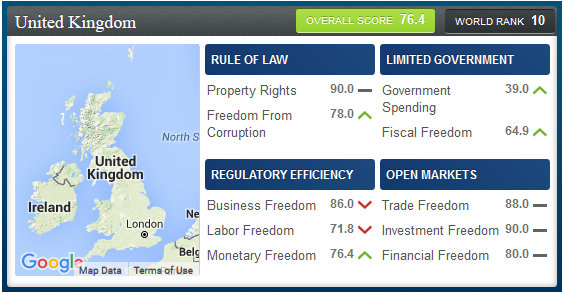
Issues discussed at the meeting, which aimed at boosting the already strong bilateral relations, involved matters of mutual interest to both Ghana and the United Kingdom (UK). The discussions focused on improving Ghana-UK trade, matters of common interest in foreign policy and security, as well as ensuring stability of the Economic Community of West African States (ECOWAS) region. Other areas discussed were business co-operation, especially ensuring that UK encourages it firms to invest in Ghana’s economy.

The UK government is particularly happy about events in Ghana because of issues relating to democracy, good governance, rule of law, as well as the determination of the new government to make life better for Ghanaians just as the British government would also want to improve welfare conditions for its people. Also, matters of security are of great interest because without security, bilateral relations would not have any meaningful impact on the two countries.

It is generally recognised by British business entities that Ghana is a stable place to do business. What Ghana needs to do is to streamline and smoothen out the business regulatory framework in the country to entice investors. Generally, however, many companies from the UK share the view that Ghana’s environment is beautiful and investor-friendly.

This is why the government of Ghana has no choice but to focus on further improvement to make it far easy for companies to do business here. At the same time, it must continue to take strong measures to address or tackle corruption.

Apart from the UK, other countries have demonstrated that they have great confidence in the determination of Ghanaians to deal with their own problems and improve upon the welfare of the people. The world has become a global village and this explains why internationalisation of issues relating to common interests in the form of bilateral and other forms of relations have become a common feature among countries that stand for peace.

Currently, it is estimated that there are 900,000 Africans living in the UK, of which 9,400 people are of Ghanaian origin, including British-Ghanaians. In the same way, British companies have been playing key roles in the Ghanaian economy, notably the oil sector, extractive industries, telecommunications network across the country, the financial sector, the cocoa industry and other areas of agri-business.

In fact, the two countries are cemented by a common bond of employer-employee socio-cultural traits that are mutually beneficial. For example, in 2005, a study carried out by the Sheffield University Social and Spatial Inequalities Research Group revealed that 64 per cent of new immigrants from Ghana were employed in the UK, of which 17 per cent and three per cent were low and high earners respectively.

Ghana-UK bilateral relations have come to stay since the two countries share a common interest of ensuring economic growth for their respective countries. Indeed, the meeting between the two leaders was very significant, seeing that the people of the two countries have been involved in economic relations over the years.

Relations between the two countries are rooted in long-standing economic, political and cultural connections, as well as shared values. Furthermore, the democratic credentials of the two countries have helped in strengthening the links between the two countries, which are committed to fighting for the eradication of disease, poverty, squalor, promotion of bilateral trade and improvement in the welfare of people.

It is important for the two countries to pursue a common agenda towards the promotion of good governance, rule of law, democracy, the eradication of corruption, as well as committing themselves to the enhancement of continuous growth, prosperity and equitable or mutually beneficial trade relations.

No country in the world is an island, so both Ghana and the UK should do all they can to consolidate their bilateral relations for their mutual benefit.

Thursday, February 23, 2017

Ghana is The Most Expensive Country in Africa

ghana, most expensive country
Ghana tops the rest of Africa as the most expensive country to live in.

The survey report published by MoveHub, an Independent website, Ghana ranks among 20 other nations the world over considered as the most expensive to reside in.

The report said MoveHub based its assessment on a range of costs such as the price of groceries, transport, bills, restaurants and rents.

“Ghana is one of Africa’s more prosperous nations, and this is reflected in the cost of living, which is higher than any other African nation,” the report stated. “New York was given an index score of 100, and countries were then ranked based on this. So a country with a score higher than 100 is more expensive than New York, while below signals that it is cheaper.”

Ghana, with a score of 53.89, is one of Africa’s more prosperous nations, which has a bearing on the cost of living, according to MoveHub.

Below is the list of the 21 most expensive countries in the world

21. Ghana — 53.89: Ghana is one of Africa’s more prosperous nations, and this is reflected in the cost of living, which is higher than any other African nation, according to MoveHub.

20. Italy — 53.89: The cost of living in Italy is higher than in the eurozone’s two largest economies, Germany and France.

19. Israel — 54.11: Israel is, comparatively speaking, pretty inexpensive compared to other states in the region like Kuwait and the UAE.

18. Kuwait — 57.31: Kuwait’s currency, the Kuwaiti dinar, is one of the strongest currency units in the world, with a single dinar worth £2.63.

17. Japan — 57.62: Japan’s economy may have stagnated somewhat in recent years, but it still remains one of the world’s powerhouses, and that is reflected in the cost of living.

7. Bahamas — 73.63: The Caribbean state of the Bahamas faces the same problem as many island nations, that imports far outstrip exports, pushing up the price of goods.

6. Norway — 74.47: Scandinavian countries are notoriously expensive, and Norway is no exception. According to Numbeo, the average 1 bedroom apartment in the country costs around £925 per month to rent.

5. Singapore — 76.57: According to the blog Singapore Life News, the average cost of a pint of beer in the city-state is around £8.50.

4. Iceland — 80.47: Cut off from the rest of Europe and with very little fertile ground, Iceland is forced to import much of its food, pushing up costs.

3. Hong Kong — 81.93: Hong Kong is notoriously expensive, and with space at a premium in the incredibly crowded city, apartments are usually both tiny and pricey.

2. Switzerland — 90.68: Switzerland frequently tops lists of the best places on earth to live thanks to great infrastructure, healthcare and a clean environment. However, all this comes at a price and it is the most expensive place in Europe to live.

1. Bermuda — 126.34: The Atlantic Ocean tax haven of Bermuda is officially the most expensive nation on earth, with the country’s capital Hamilton also the most expensive individual city on the planet.

Monday, January 30, 2017

Germany to Partner Ghana in Agricultural Development

German Ambassador to Ghana, Christoph Retzlaff meets Dr. Owusu Afriyie Akoto.
The German Ambassador to Ghana, His Excellency Christoph Retzlaff, has met with Ghana's Minister of Food and Agriculture, Hon. Dr. Owusu Afriyie Akoto, to dicusss ways the German Government can contribute towards the growth and development of the sector.

The two parties discussed amongst other things, how the European powerhouse can partner the private sector in order to support the development of Ghana's agriculture.

His Excellency Christoph Retzlaff, who announced this when he paid a courtesy call on the Agric Minister at his office last Friday, observed that there are great potentials in the country's agricultural sector which when tapped will inure to the utmost benefits of all Ghanaians.

He said Germany will readily support Ghana's agriculture particularly in partnership with the private sector to improve its growth and development.


Read Also: 66% of Rice Consumed in Ghana Imported

The German Ambassador to Ghana therefore commended the Agric Minister for his zeal and commitment towards his duty.

He therefore requested that the Ministry furnishes him with government's plans and proposals towards revamping the agricultural sector so that his government can adequately contribute.

On his part, the Food and Agriculture Minister welcomed the idea and expressed government of Ghana's readiness to partner Germany in the development of the agric sector.

He said the government under the leadership of His Excellency Nana Addo Dankwah Akufo Addo, made a promise to Ghanaians to modernize the agricultural sector and create jobs for the teeming youths, adding that any effort geared towards the the fulfilment of that objectives will be gladly welcomed.

"Our President is passionate about the development of the agric sector and the creation of jobs, we will therefore not hesitate at all in making sure that objective is fulfilled," the minister emphasized.

The Minister had earlier on met with Ambassadors from Canada, Sweden and other developing partners.